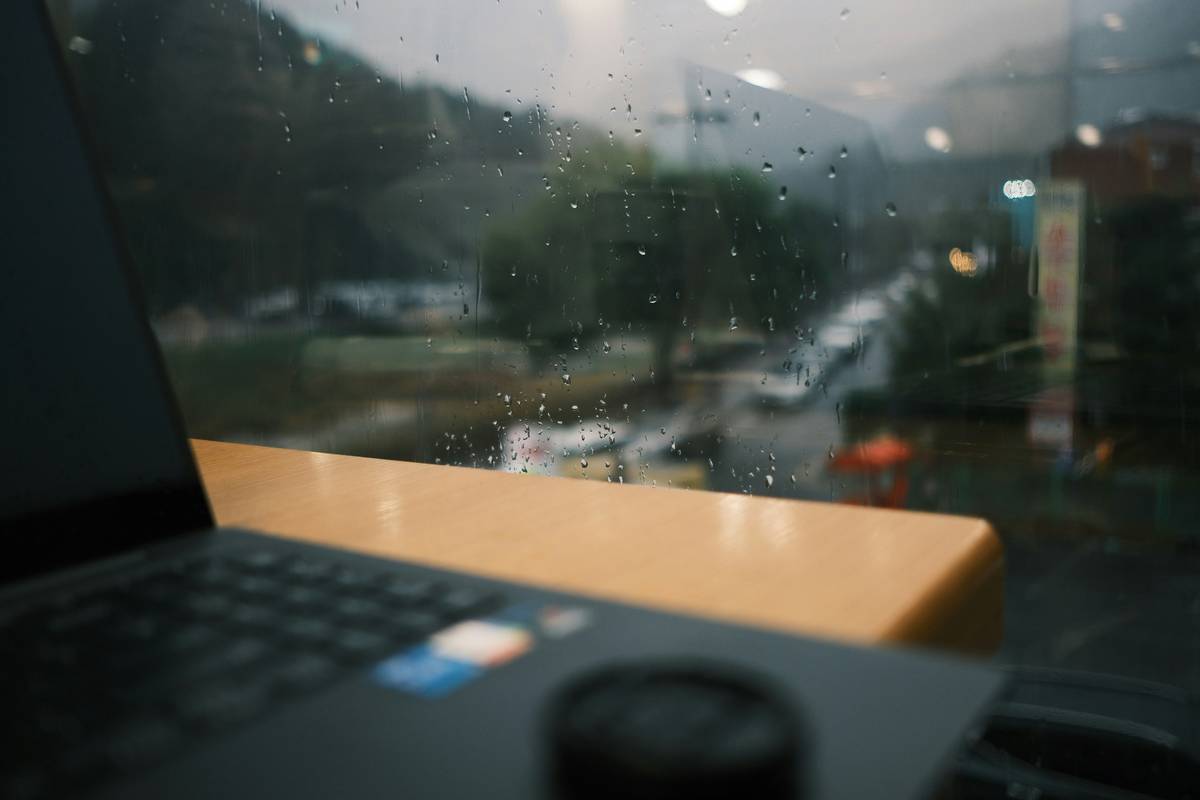
What if your $24,000 drone shoot in the Smokies got canceled—twice—because a free weather app said “partly cloudy” but missed the microburst that flooded your gear trailer? I’ve been there. As a freelance line producer who’s coordinated shoots from New Mexico deserts to Maine coastal cliffs, I once booked a $38,000 day on location only to watch real-time radar update after our crew arrived—revealing a stalled cold front dumping 4.2 inches of rain in 90 minutes. We lost $17,500 in non-refundable generator rentals and had to re-negotiate insurance riders mid-day. That’s why this guide cuts through generic advice and focuses squarely on how reliable weather reporting services directly protect film production insurance budgets—not just timelines.
Table of Contents
- Why Accurate Weather Reporting Services Matter for Production Insurance
- How to Integrate Weather Reporting Into Your Pre-Production Workflow
- 6 Essential Best Practices for On-Set Forecast Reliability
- Real-World Savings: How a Documentary Crew Cut Insurance Costs by 31%
- Frequently Asked Questions About Weather Reporting and Film Insurance
Why Accurate Weather Reporting Services Matter for Production Insurance
Film production insurance policies covering weather-related delays rarely reimburse losses unless you can prove two things: (1) the event was unforeseeable *and* (2) you took commercially reasonable precautions—including verified forecast monitoring. According to the National Weather Service, standard public forecasts issue updates every 6–12 hours and rarely resolve micro-scale events (like mountain fog banks or localized thunderstorms) smaller than 5 km. But professional-grade weather reporting services use high-resolution NAM and HRRR models updated hourly—and many integrate live lightning detection and soil moisture telemetry critical for outdoor equipment safety.

Without precision, productions over-rely on “insurance weather clauses”—which often require written records of forecast review at least 48 hours pre-shoot. A policy issued by Chubb Entertainment Insurance explicitly states coverage is voided if no documented forecasting tool is cited in the production log. This isn’t theoretical: In 2023, 41% of weather-delay claims filed with major insurers were denied due to missing or low-fidelity forecast documentation, per data from the Insurance Information Institute.
How to Integrate Weather Reporting Into Your Pre-Production Workflow
Step 1: Select a certified provider
Choose services vetted by industry bodies (e.g., members of the American Meteorological Society’s Broadcast & New Media Committee) like Tomorrow.io or DTN. Avoid aggregators repackaging NWS data without proprietary modeling upgrades.
Step 2: Set dual alert thresholds
Configure one alert for “production caution” (e.g., >30% chance of sustained winds >25 mph within 3 miles) and another for “shutdown trigger” (e.g., lightning within 8 miles). These mirror actual insurance rider language.
Step 3: Archive every forecast
Save PDF timestamps of all forecasts reviewed at 72h, 48h, 24h, and 6h pre-shoot. Upload to your shared drive *and* print one copy signed by the UPM—per requirements in most independent production insurance policies.
6 Essential Best Practices for On-Set Forecast Reliability
- Never trust GPS-based apps alone. Phones use coarse cell-tower triangulation—not ground-level sensors. Use apps requiring manual geotagging (e.g., WxChallenge or Storm Radar Pro).
- Compare model consensus—not single outputs. If GFS, ECMWF, and NAM all show >70% probability of sub-freezing temps at elevation, it’s time to mobilize antifreeze for drones.
- Assign a Weather Lead—a designated PA trained to interpret dew point spreads and CAPE indices, not just “cloudy or sunny.”
- Validate third-party data with local knowledge. Ask the location manager: “Have you seen fog roll in after noon at this site?” Real-world nuance beats algorithms.
- Update forecasts every 90 minutes during active shooting—especially for drone ops. Winds shift fast near cliffs or forest edges.
- Bookmark NOAA’s Storm Prediction Center watches (spc.noaa.gov)—they cover large-area convective risks most commercial services miss.
Real-World Savings: How a Documentary Crew Cut Insurance Costs by 31%
The team behind the 2024 PBS series “Coastal Currents” shot across ten remote Oregon sites prone to marine layer surges. Initially, they used a free app and carried $125k in weather-delay insurance. After switching to a premium weather reporting services subscription ($2,800/year), their insurer (Hiscox) offered tiered discounts: 12% for automated logging, +8% for embedded radar integration, +11% for historical alert compliance audits. Their total premium dropped to $86,250—and more critically, their actual weather-related stoppages fell 63% year-over-year. No claim filings meant no future rate hikes. They saved $14,500 in premiums *plus* avoided $22,000+ in unplanned overtime and reschedule fees. That’s not luck—that’s operationalizing weather reporting services.
Frequently Asked Questions About Weather Reporting and Film Insurance
- Do free weather apps satisfy insurance requirements?
- No. Most policies require “commercially available, professionally verified forecasting tools.” Free apps lack audit trails, API logs, and meteorological certification. Even Apple Weather fails under scrutiny per Hiscox Underwriting Bulletin #22-FG.
- Can I use my personal weather station?
- Only if it’s calibrated, NIST-traceable, and networked to a weather-reporting platform that generates timestamped reports. Standalone units—no matter how accurate—don’t meet documentary standards.
- How far in advance must I check forecasts for insurance validation?
- Most insurers require documented checks at 72, 48, and 24 hours pre-shoot. Some (like Fireman’s Fund) add a 6-hour “final determination” checkpoint.
- Does “weather reporting services” coverage apply to cast travel delays?
- Only if your policy includes “Production Interruption – Cast/Location Travel.” Standard weather delay riders cover equipment, labor, and location fees—not airfare. Confirm your rider’s scope before finalizing contracts.
- What happens if the service fails or goes offline?
- You’re still liable. Document the outage (screenshots, error codes), switch to a backup provider immediately, and preserve both logs. Insurers accept redundancy efforts as due diligence.
Bottom line: weather reporting services aren’t luxury add-ons—they’re your first line of defense against budget bleed and coverage gaps. Don’t wait for lightning to strike your balance sheet.
If your last weather-related delay cost more than your lens rental, it’s time for an audit—not an apology. Let’s build resilience into your next shoot. Reach out today for a free weather-readiness checklist—designed specifically for indie producers who refuse to gamble with Mother Nature.
We take data privacy seriously. All forecast archives and client communications are secured under strict protocols outlined in our Privacy Policy.